Making NightShift “think” like a human pentester
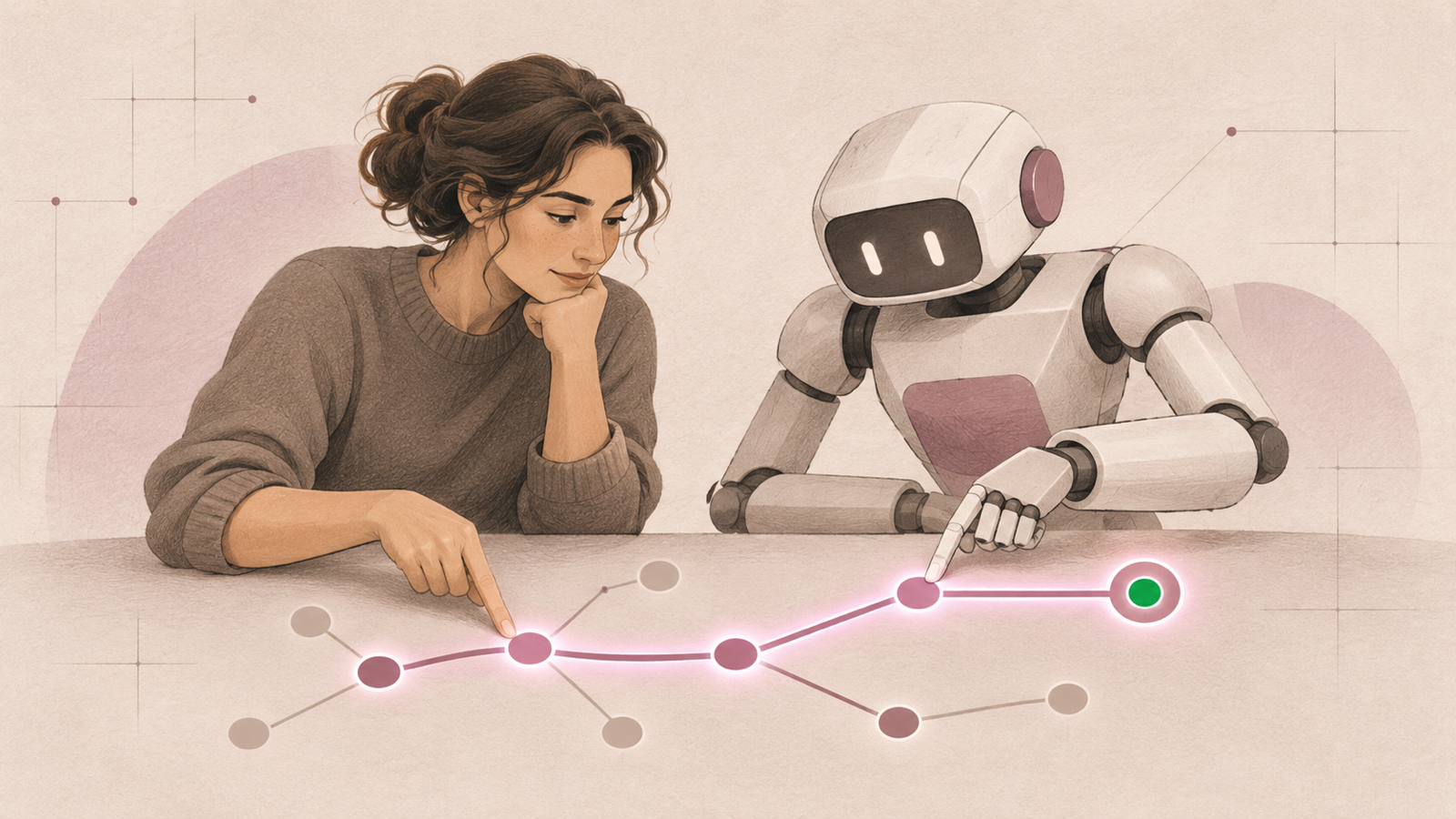
NightShift has entered its third iteration. I call it Gen3.
The earlier iterations answered a basic question: could an AI-led pentest find real security issues, validate them and produce evidence a small development team could use? They could. But as I watched NightShift work, I saw the next limitation. It treated most vulnerabilities as separate events.
Security issues rarely matter in isolation.
A weak permission check may look modest on its own. So might an exposed action or a page that stores user-supplied content. But put the right issues together and the impact can change completely. A small crack becomes a path through the application.
That is how a good human pentester thinks. They do not just work through a checklist and stop. When they prove something, they ask a second question: what does this make possible next?
The limit of finding one thing at a time
I had already made NightShift good at broad coverage. It could explore an application, run focused security checks, validate what it found and produce evidence a development team could act on.
But I had designed most of the scan up front. NightShift would test many useful things, then bring the results together at the end. That worked well for individual vulnerabilities. It was less effective when one proven result should change what NightShift tried next.
I had an early version of “chaining,” but it joined findings after the fact. It could suggest that two issues might be related; it could not prove the path between them. That distinction matters. A plausible security story is not the same as a demonstrated one.
I could have kept adding exceptions and templates. Eventually, though, I would have built a larger collection of guesses. Gen3 was my decision to fix the underlying limitation instead.
Building NightShift to follow the evidence
Gen3 gives NightShift a bounded feedback loop.
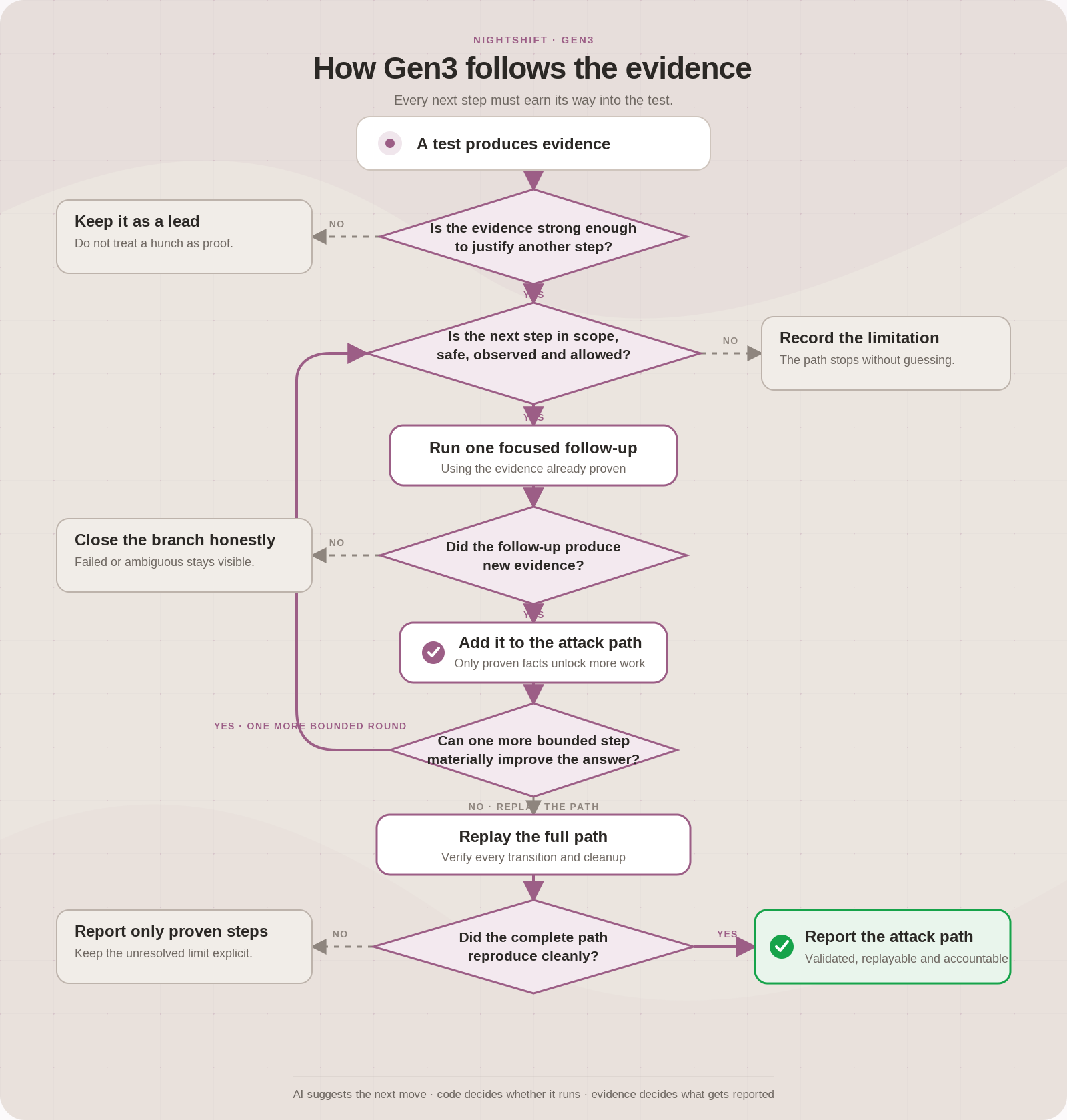
When a test produces strong evidence, NightShift can use that result to unlock a relevant next step. I still require that step to be in scope, safe for the engagement and supported by what NightShift actually observed. If it produces new evidence, the process can continue. If it does not, the path ends.
The important word is evidence.
I let the AI suggest where to look, but I do not let it declare that something worked. It cannot grant itself more access, expand the target or turn a hunch into a customer finding. I require proof for each step, and I require a multi-step attack path to replay cleanly before I report it.
This gives me more of the reasoning I want from a human pentester without turning the scan into an open-ended experiment.
Better answers, not just more findings
I did not build Gen3 to make the findings count go up.
I believe ten isolated warnings are often less useful to a small development team than one clear explanation of how an attacker could move from an ordinary account to something that actually matters. I want that path to help the team understand impact, choose what to fix first and explain the risk to a customer or auditor.
I also wanted NightShift to be more honest. If it proves only the first step, I say that in the report. If a follow-up is blocked, ambiguous or unsafe to attempt, I keep that limitation visible. I would rather say “I do not know” than tell a confident story the evidence cannot support.
That is why I built Gen3: not to make the AI more autonomous, but to make the pentest more connected, more useful and more accountable to what really happened.